Are Turbo Engines Good for Mountain Driving?
Anyone who drives the Wasatch Front long enough starts asking the same question: turbo vs regular engines for driving in Utah, which one actually holds up on our climbs? The elevation gain on I-15, the grade into Parleys Canyon, winter mornings that test any engine's cold-start habits. Most owner's manuals were never written with roads like these in mind. We hear this question every week at Bountiful Mazda, and we'd rather walk you through it than push an answer before you've driven both. If you want to start comparing options now, you can browse new Mazda inventory while you read.
Why Elevation Changes the Engine Equation Along the Wasatch Front
Bountiful sits at roughly 4,771 feet, and Salt Lake City isn't far behind at about 4,300 feet. That's already thinner air than most engines were tuned to expect at sea level. The Wasatch Front runs north from Santaquin through Provo, Salt Lake City, Bountiful, Layton, Ogden, and Pleasant View, and the Wasatch Range itself tops out at 11,928 feet at Mount Nebo, with the valley floor sitting near 4,330 feet. Engine choice carries more weight here than it would in a flatter state.
How Thin Mountain Air Reduces Naturally Aspirated Power
A naturally aspirated engine breathes on its own, pulling in whatever air is available at the current altitude. As elevation climbs, oxygen density drops, and this type of engine loses roughly 3% of its power for every 1,000 feet gained. It's a real, measurable trade-off, and it's one reason the n/a vs turbo conversation matters more in Utah than it does in flatter states.
Steep Grades: I-15 Commutes and Parleys Canyon Climbs
Elevation loss isn't just a number on a road sign. Bountiful Peak rises more than 5,000 feet above I-15 within just four miles, and Parleys Summit tops out at 7,120 feet, the highest point along I-80 in Utah. Grades like these ask an engine to work harder exactly when it has less oxygen to pull from, and that's where the difference between a turbocharged engine and a naturally aspirated one starts to show up in real driving, not just spec sheets.
How Turbocharged Skyactiv Engines Compensate for Altitude
A turbocharged engine handles this kind of terrain well because it's built to solve the exact problem thin air creates. Rather than breathing passively, it forces more air into the combustion chamber than the atmosphere alone would provide, which offsets, though doesn't fully eliminate, the power loss that comes with altitude.
The Mechanics of Forced Induction at High Elevation
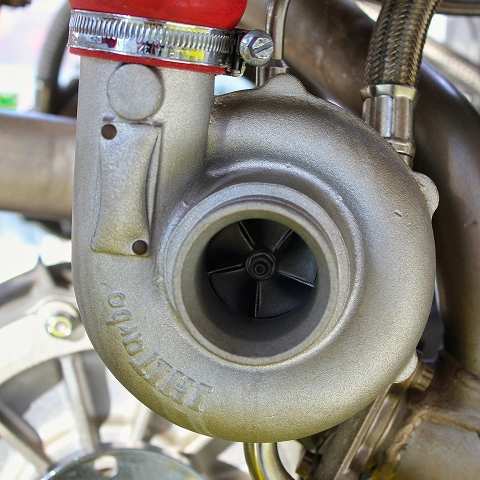
The mechanism itself is fairly simple once you break it down. Exhaust gas spins a turbine, which is connected by a shaft to a compressor on the intake side. That compressor pushes denser, boosted air into the engine, giving it more oxygen to work with than it would get on its own. This is the core reason turbocharged engines hold power more consistently as elevation increases, and it's worth understanding before you decide whether a turbo model fits your daily drive.
Skyactiv-G: The Naturally Aspirated Advantage for Everyday Driving
Plenty of Utah drivers spend most of their time in the valley, where elevation isn't fighting the engine all day. If that's your routine, a Skyactiv-G naturally aspirated engine has real advantages. Fewer moving parts endure thermal stress, throttle response stays linear, and the whole system is mechanically simpler. These are the same reasons naturally aspirated setups remain popular even in performance-focused segments; simplicity has its own value.
When a Regular Engine Is the Smart, Cost-Effective Choice
If your commute stays on flatter stretches of Davis, Salt Lake, or Weber counties and rarely ventures up canyon grades, a naturally aspirated Mazda like the CX-5 or Mazda3 Sedan is a sensible, cost-effective pick. You get dependable performance without the added complexity of forced induction, which can also mean fewer components to think about over the life of the vehicle.
Skyactiv-G Turbo: Built for Canyon Roads and Winter Ski Trips
For drivers who regularly head up to ski country or haul gear through Parleys Canyon, the turbocharged side of Mazda's lineup tells a different story. The CX-50 Turbo and Mazda3 Sedan Turbo use the Skyactiv-G 2.5 Turbo, while the three-row CX-70 and CX-90 step up to a 3.3L turbocharged inline-six with 48-volt mild hybrid assist, reaching 340 horsepower and 369 lb-ft in Turbo S form on premium fuel. That inline-six is the strongest case in the lineup for altitude driving, since a larger displacement turbo engine has more air to compress before boost even enters the picture.
The CX-50 Turbo tows up to 3,500 pounds when properly equipped with Mazda genuine towing accessories and towing mode, and the CX-90 goes considerably further, which matters if a boat or trailer is part of your winter routine. The current CX-5 lineup stays naturally aspirated. Check current vehicle specials if you're weighing a turbo model against a naturally aspirated one this season.
Passing Power and Confidence on Steep Mountain Grades
A turbocharged engine buys you stronger passing power and more confidence on long grades, at the cost of a more complex system to maintain. On climbs like the one into Parleys Canyon, that extra boost translates into less throttle strain and a more relaxed drive, especially with a loaded vehicle in winter conditions.
Turbo vs. Regular Mazda Engines: Head-to-Head in Utah Conditions
Numbers make this easier to compare than opinions do. Mazda's current lineup breaks down like this for power and torque, which matters most once you're gaining elevation.
| Model | Engine | Horsepower | Torque |
|---|---|---|---|
| MX-5 Miata | Skyactiv-G 2.0 NA | 181 hp | 151 lb-ft |
| Mazda3 Sedan | Skyactiv-G 2.5 NA | 186 hp | 186 lb-ft |
| CX-5 | Skyactiv-G 2.5 NA | 187 hp | 186 lb-ft |
| CX-50 | Skyactiv-G 2.5 NA | 187 hp | 185 lb-ft |
| Mazda3 Sedan Turbo | Skyactiv-G 2.5 Dynamic Pressure Turbo | 250 hp (93 octane) / 227 hp (87 octane) | 320 lb-ft (93) / 310 lb-ft (87) |
| CX-50 Turbo | Skyactiv-G 2.5 Turbo | 256 hp (93 octane) / 227 hp (87 octane) | 320 lb-ft (93) / 310 lb-ft (87) |
| CX-70 / CX-90 3.3 Turbo | Skyactiv-G 3.3 Turbo inline-6 | 280 hp (93 octane) | 332 lb-ft |
| CX-70 / CX-90 3.3 Turbo S | Skyactiv-G 3.3 Turbo inline-6 | 340 hp (93 octane) | 369 lb-ft |
Power and Performance at Elevation
The turbocharged figures above hold up better as elevation climbs, since forced induction compensates for the thinner air. A naturally aspirated engine's rated horsepower and torque are still accurate at sea level, but expect that number to soften gradually as you climb toward Parleys Summit or up into the Wasatch Range.
Fuel Efficiency in Mountain Driving
Fuel economy tells its own story, and it doesn't always favor the naturally aspirated side the way you'd assume.
| Model | City/Highway/Combined MPG |
|---|---|
| CX-5 | 24/30/26 |
| CX-50 | 24/30/26 |
| CX-50 Turbo | 23/29/25 |
| Mazda3 Sedan Turbo | 23/34/29 |
The Mazda3 Sedan Turbo actually posts a strong highway number, which matters if your typical drive includes long stretches on I-15 rather than constant stop-and-go.
Long-Term Reliability in Cold, High-Altitude Climates
Turbo engines generally hold up fine in a climate like ours, though reliability comes with different considerations than a naturally aspirated setup. A turbocharger adds parts that operate under real thermal stress, spinning at high speed and running hotter than a naturally aspirated intake. A naturally aspirated engine avoids that added complexity but gives up some power as elevation increases.
Both options hold up well when maintained on schedule, which is part of why we built our Oil for Life program and Customer for Life warranty perks around consistent maintenance, whether you're driving a turbo or a regular engine. We recommend scheduling routine visits through our Mazda Service Center.
Which Mazda Engine Matches Your Northern Utah Lifestyle
The right choice depends entirely on how you actually drive, not on which engine sounds more impressive on paper.
Best Turbocharged Mazda Models for Mountain Performance
If ski trips, canyon roads, or regular towing are part of your life, the CX-50 Turbo and Mazda3 Sedan Turbo are worth serious consideration. Their Skyactiv-G Turbo engines are built specifically to hold power where a naturally aspirated engine starts to fade.
Best Naturally Aspirated Mazda Models for Daily Commuting
For a straightforward commute across Davis, Salt Lake, or Weber counties, the CX-5, CX-50, and Mazda3 Sedan all deliver dependable naturally aspirated performance without added mechanical complexity, and the CX-50 Hybrid pushes efficiency further at an EPA-estimated 39 city, 37 highway, and 38 combined. The MX-5 Miata is naturally aspirated too, though a two-seat roadster is a weekend car for most Utah drivers rather than a winter commuter.
If you're considering a certified pre-owned option in either category, our inventory includes a five-day exchange policy and free vehicle history reporting on every CPO vehicle.
Feel the Difference: Schedule a Side-by-Side Test Drive at Bountiful Mazda
Questions to Ask Before You Decide
A few things worth thinking through before you decide: how much towing do you actually do, what's your typical commute route and how much elevation does it really gain, how often are you dealing with cold starts in winter, and what's your comfort level with long-term maintenance budgets on a more complex engine?
Book Your Test Drive
The clearest way to answer the turbo vs regular engines for driving in Utah question is to feel it yourself on the same roads you drive every day. We invite you to schedule a side-by-side test drive at Bountiful Mazda, right here where the Wasatch Front elevation makes the difference obvious. Contact us online or call our sales team at 801-878-6518 to set up your drive.
Image by Gab | Licensed with Unsplash License