What to Know Before Financing a Used Car
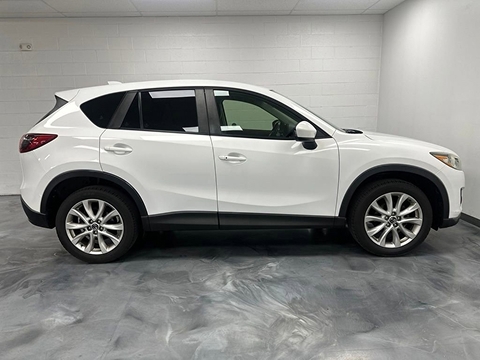
Buying a used car is one of the most practical financial decisions you can make, but the financing side trips up a lot of buyers. Interest rates, loan terms, down payments, credit scores, it all hits at once. Once you understand how used car financing actually works, though, the process feels far less intimidating.
If you're ready to get started now, you can apply for financing directly through our site. Otherwise, this guide breaks down what to know about financing a used car so you can walk in prepared and clear on what you're signing.
Why Used Car Financing Feels Confusing (And How to Simplify It)
At its core, you're borrowing money from a lender, using those funds to buy the vehicle, and repaying the loan over time with interest. The lender holds the title until you've paid it off. The confusion usually comes from how many variables are in play at once: interest rates shift based on your credit profile, loan terms run anywhere from 24 to 84 months, and different lenders price risk differently. Throw in trade-in values, down payments, and dealer financing options, and it's easy to feel overwhelmed.
The simplest way to cut through it? Start with your own financial picture before you ever set foot on a lot.
How Your Credit Score Shapes Your Loan Options
Your credit score is the single biggest factor lenders use when determining your rate on a used car loan. A stronger score means better terms; a weaker score means you'll likely pay more over the life of the loan. That doesn't mean you can't get approved with imperfect credit (many lenders work with a wide range of profiles), but knowing where you stand helps set realistic expectations.
What Credit Ranges Mean for Your Interest Rate
According to Experian's State of the Automotive Finance Market (Q1 2025), used car APRs vary significantly by credit tier:
| Credit tier | Score range | Typical used car APR |
|---|---|---|
| Super prime | 781 or above | 6.82% |
| Prime | 661 - 780 | 9.06% |
| Near prime | 601 - 660 | 13.74% |
| Subprime | 501 - 600 | 18.99% |
| Deep subprime | 300 - 500 | 21.58% |
These are general market benchmarks, not dealership guarantees. Even moving from Near Prime to Prime credit can meaningfully reduce your total loan cost, so if your score isn't where you'd like it, a few months of focused effort (paying down balances, disputing errors) can move you into a better tier.
How to Check Your Credit Before You Apply
Pull your credit report for free through AnnualCreditReport.com, which gives you access to reports from all three major bureaus. Review them carefully for errors, outdated accounts, or anything unfamiliar. Resolving inaccuracies before you apply can have a real impact on your score and, by extension, your interest rate.
Why Getting Pre-Approved Is Worth the Extra Step
Pre-approval is one of the most underused tools in car financing. When you get pre-approved, a lender reviews your credit and income and gives you a conditional offer (a loan amount and an interest rate) that becomes your baseline as you shop. It tells you exactly what you can afford before you fall in love with a vehicle, and it gives you a concrete rate to compare against whatever the dealership offers.
One important detail: rate shopping within a 14 to 45 day window (depending on the scoring model) typically counts as a single hard inquiry on your credit report. Applying to multiple lenders in quick succession won't hurt your score the way multiple unrelated credit applications would. Pre-approval doesn't lock you in either. If the dealership beats the rate, you take it. While you're getting oriented, you can also browse our pre-owned specials to get a sense of what's available at different price points.
Down Payments, Trade-Ins, and Why They Matter More Than You Think
A down payment reduces the amount you need to borrow, which lowers both your monthly payment and the total interest you'll pay. Most lenders prefer to see at least 10 to 20% down on a used vehicle. On an $18,000 car, that's $1,800 to $3,600 upfront. A solid down payment also signals financial stability to the lender, which can help with approval in tighter credit situations.
Lenders also evaluate the loan-to-value ratio (LTV) of your loan, meaning the amount borrowed relative to the vehicle's appraised value. For used cars, many lenders look for an LTV at or below 100 to 120%. Older or high-mileage vehicles may appraise lower than the purchase price, which affects how much a lender will finance. Worth factoring in when you're setting your down payment target.
Trade-ins work similarly. If you have a vehicle to trade, its value gets applied toward your loan balance from day one. Research your car's market value before you negotiate so you're working from a realistic baseline.
Monthly Payment vs. Total Loan Cost: Knowing the Difference
These are two very different numbers, and conflating them is one of the most common mistakes buyers make. Focusing only on the monthly payment can cost you significantly over time. A lower monthly payment often means a longer loan term and more months of interest piling up.
How Loan Term Affects What You Actually Pay
Here's a concrete example using an $18,000 vehicle with 10% down ($1,800), leaving $16,200 financed:
-
Scenario A — 36 months at 6.5% APR: approximately $498/month, with roughly $1,718 in total interest paid
-
Scenario B — 60 months at 8.5% APR: approximately $332/month, with roughly $3,748 in total interest paid
The longer term saves about $166 per month but costs around $2,030 more in interest over the life of the loan. That's the trade-off: monthly affordability versus total cost. If you're financing at a high LTV or choosing a 60 to 72 month term, it's also worth asking about GAP coverage, which protects you if the vehicle's value drops below your remaining loan balance. That's a real risk when depreciation outpaces payoff.
Choose the shortest loan term you can manage comfortably without stretching your budget. The total cost matters far more than the monthly number alone.
Building a Realistic Budget Beyond the Car Note
Insurance premiums, fuel, routine maintenance, and registration fees all affect what you can realistically afford. A vehicle that fits your loan budget but strains everything else isn't actually affordable. Before committing, add up those surrounding costs and make sure the full picture works with your income.
Common Financing Mistakes That Cost Buyers More
Skipping Vehicle History or Inspection
A vehicle's history can reveal past accidents, flood damage, odometer discrepancies, or unresolved liens. Skipping that step to save time is a risk that rarely pays off. Always request a Carfax report and, when possible, have the vehicle inspected by a trusted mechanic before signing anything.
Accepting the First Loan Offer Without Comparing
The first financing offer you receive isn't necessarily the best one. It's worth comparing at least a few options before you decide. Even a one or two percentage point difference in your APR can translate to hundreds of dollars over a 48 to 60 month loan. Here's how common financing sources compare:
| Source | Typical APR Range | Approval Speed | Flexibility for Lower Credit | Preapproval Available |
|---|---|---|---|---|
| Bank / Credit Union | Competitive (varies) | 1–3 business days | Moderate | Yes |
| Online Lender | Varies widely | Often same day | Varies by lender | Yes |
| Dealership Financing | Varies by lender network | Often same day | Often more flexible | Yes |
Credit unions in particular frequently offer competitive rates for members. Having a few real numbers in front of you makes it much easier to spot what's genuinely favorable versus what just sounds reasonable in the moment.
How Bountiful Mazda Makes Used Car Financing Easier
At Bountiful Mazda in Bountiful, UT, we work with a network of lenders to find used car financing options that fit different credit profiles and financial situations, whether you're a first-time buyer, upgrading, or rebuilding credit. We serve drivers across Davis, Salt Lake, and Weber counties, and our approach is straightforward: start with your budget, not our inventory.
Every pre-owned vehicle we sell comes with a free Carfax report so you know exactly what you're financing. We also offer a 5-day exchange policy on pre-owned vehicles, a genuine rarity that gives you real confidence the decision you're making is the right one. These aren't just selling points; they're direct answers to the concerns most buyers have when financing a used car.
Start Your Used Car Search with Bountiful Mazda
If you're ready to explore your options, you can browse inventory, estimate payments, value a trade, and start your financing application all from our site. Our team is available Monday through Saturday from 9 AM to 8 PM, or you can contact our team online anytime. Whatever stage you're at, still researching or ready to get behind the wheel, we're here to make the process feel manageable from the first question to the final signature.